

In our previous article on Zero-Downtime Deployments: How Kubernetes Saves Your E-Commerce Store from Lost Revenue, we covered how modern DevOps practices enable seamless website updates. But what happens when peak traffic spikes unexpectedly in the middle of the day, or a server crashes due to a physical hardware failure—such as a failed hard drive or power supply in the data center?
This is where the core pillars of High Availability (a system’s ability to operate continuously without interruption)—namely load balancing and failover mechanisms—come into play.
Anatomy of Stability: Load Balancing
According to industry standards from the Uptime Institute, system availability is measured in “nines.” The gold standard for enterprise e-commerce platforms is 99.999% uptime (“five nines”), which allows for no more than 5 minutes and 15 seconds of unscheduled downtime per year.
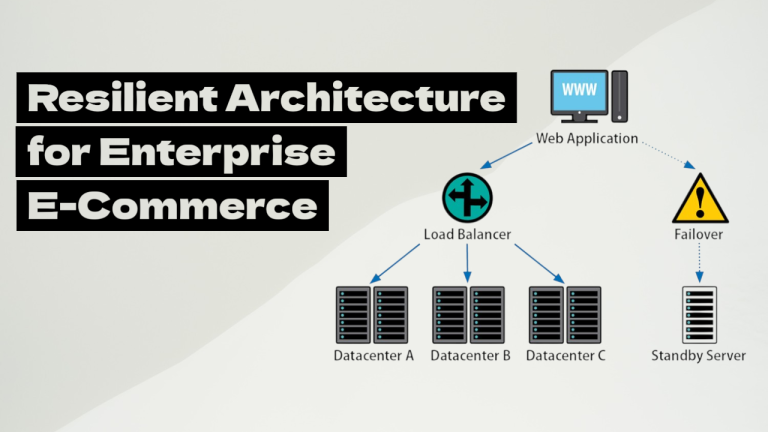
To achieve this level of reliability and efficiently distribute incoming requests, traffic cannot be routed to a single server. Instead, a dedicated load balancer is used to manage traffic distribution:
- Traffic Distribution: The load balancer accepts incoming requests from thousands of simultaneous users and instantly distributes them across multiple active server nodes.
- Load Balancing Algorithms: Common routing strategies include Round Robin (sequential request distribution) and Least Connections (routing traffic to the server with the fewest active sessions and lowest CPU load).
- Overload Prevention: If a server slows down due to a complex database query, an intelligent load balancer temporarily routes traffic away from it, preventing system-wide latency or crashes.
Failover Strategies: What Happens When a Server Crashes?
Even the best traffic routing cannot prevent outages if a core system component experiences an unrecoverable failure. This is why architects design automated failover mechanisms to switch traffic to backup resources. Research by Gartner shows that up to 95% of cloud incidents stem from human error, making automated disaster recovery critical for business continuity.
Cloud architects typically implement one of these redundancy models:
- Active-Active Redundancy: All servers process live traffic simultaneously. If one node fails, the remaining nodes absorb the load without disrupting user sessions.
- Active-Passive Redundancy: The primary server handles active operations while a standby backup server remains idle. Upon failure, the system automatically redirects traffic to the secondary instance.
- Geographic Redundancy (Multi-Region Deployment): Distributing infrastructure across isolated data centers in different regions or availability zones protects the system against large-scale regional outages.
Manual intervention is the enemy of stability. Manually updating DNS or server configurations during a live outage inevitably increases downtime. Automated failover must happen instantaneously without human involvement.
Why Fault Tolerance Matters for Your Business
For business owners, a fault-tolerant web architecture ensures that marketing and advertising budgets aren’t wasted during flash sales or peak shopping events due to server crashes.
For product managers and engineering leads, robust load balancing and failover architecture provides:
- Predictable performance during high-traffic promotional campaigns.
- Fewer emergency firefighting situations for engineering teams.
- Consistent adherence to strict Service Level Agreements (SLAs) for customers.
If you want to dive deeper into how we build reliable digital products, explore our approach on the Skynix Development Process page.
In the final part of our trilogy, we will cover how to prepare your e-commerce infrastructure for seasonal traffic surges like Black Friday. Stay tuned!
Have questions about your project’s reliability or planning an e-commerce scaling initiative? Message us via our website chatbot or directly on LinkedIn—our technical team will gladly analyze your system architecture!