
For many e-commerce store owners, deploying new features feels like a high-stress event complete with late-night anxiety and endless page refreshes, hoping the site doesn’t crash mid-night. But in 2026, such risks are no longer a technical inevitability—they are simply the consequence of outdated approaches.
Why 5 Minutes of Downtime Costs You More Than You Think
Even at night, your e-commerce website never sleeps. An hour of technical downtime during a deployment isn’t just a temporary inconvenience. It means:
- Lost transactions that were already sitting in the shopping cart.
- Dropped search engine rankings (Google heavily penalizes unavailable websites).
- Disrupted marketing campaigns launched precisely on schedule.
- Reputational damage: customers greeted with a “502 Bad Gateway” error are likely to shop with a competitor instead.
The old “stop the site — update files — restart” approach is a direct path to financial losses.
Block 1: The Anatomy of Downtime — Why Servers Crash
When updating a traditional website, the process typically involves sequential shutdown and startup. While the server is spinning up or copying data, users experience errors and broken pages.
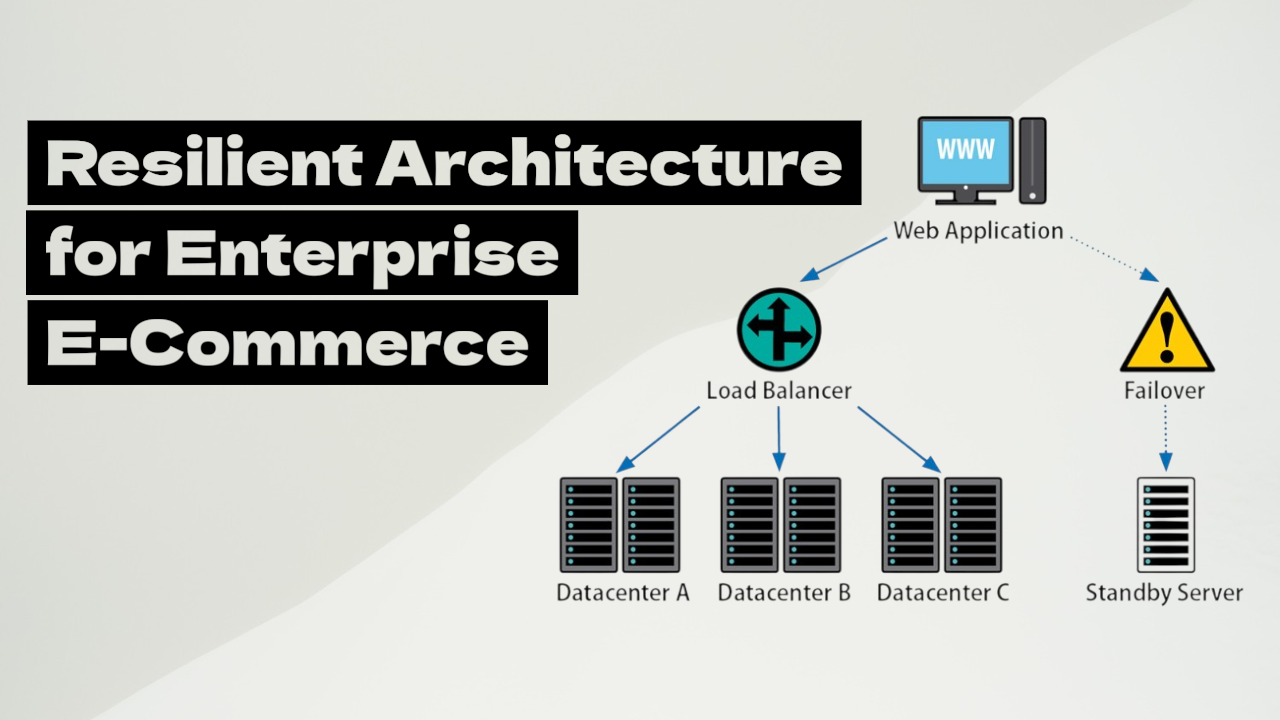
Achieving a zero-downtime deployment can be done through various methods: ranging from classic traffic balancing between two nodes on a standard VPS (using Nginx or Docker Compose) to complex cloud orchestrators. The choice always depends on your budget, traffic load, project architecture, and scaling plans. However, for enterprise-grade e-commerce where every minute of downtime costs real money, our absolute favorite at Skynix is Kubernetes. Let’s break down how it works.
Kubernetes transforms the rules of the game through two core mechanisms:
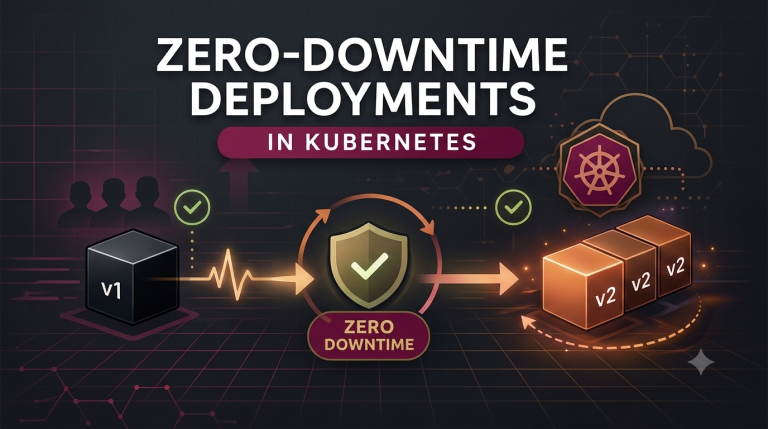
- RollingUpdate: Instead of shutting down all servers simultaneously, K8s updates them sequentially. While the old container continues serving live requests, the new container undergoes rigorous validation.
- Liveness/Readiness Probes: These act as automated “checkpoints.” Kubernetes will not route live traffic to a new service until it receives a definitive signal that the container is fully loaded and ready. If anything goes wrong, K8s blocks the release, leaving your production site stable on the previous working version.
Block 2: Architectural Approaches to Continuity
To make your deployments boring, secure, and entirely seamless, we leverage advanced infrastructure strategies at Skynix:
- Blue-Green or Canary Deployments: We never patch a live version directly. We deploy an entirely new copy of your system (Green) parallel to the current one (Blue). Only after comprehensive checks do we shift the customer traffic stream over. If anomalies emerge, a one-second instant rollback reverts the change safely.
- Configuration Management (ConfigMaps/Secrets): We no longer edit raw configuration files directly on servers. All environment variables and settings are managed securely inside Kubernetes objects. This eliminates human error—such as developers accidentally mixing up database passwords or API URLs during environment switches.
Even the best-configured zero-downtime deployment is only half the battle. Once a new version hits production, it is critically important to understand how it behaves under real-world load. At Skynix, we complement Kubernetes infrastructure with intelligent monitoring that automatically analyzes system health and detects anomalies, allowing the team to respond to potential issues long before they become downtime.
Block 3: When Kubernetes is the Right Solution
Does every project need Kubernetes? If you are running a single-product landing page, probably not. But for a growing e-commerce platform, the difference between a basic VPS and Kubernetes is monumental:
- Auto-Scaling: On a traditional VPS, you eventually hit a hard hardware ceiling. During high-traffic events like Black Friday or flash sales, Kubernetes dynamically provisions compute resources to handle the spike and scales back down afterward so you never overpay for idle cloud hosting.
- Security & Isolation: Unlike legacy environments where a single code bug can take down an entire monolith, Kubernetes isolates microservices. If one non-critical module fails, customers can still seamlessly browse and check out in other store sections.
Conclusion
Your infrastructure should be just as stable and resilient as your business. Transitioning to Kubernetes is your path to eliminating stressful night shifts and focusing entirely on what drives revenue: sales and product growth.
Ready to scale your e-commerce platform without the risk of lost orders? Drop us a message via live chat or reach out directly on LinkedIn. We will audit your current infrastructure, help configure seamless deployments, and set up robust monitoring.